Kindergarten math is all about building a strong sense of number. Before students can add and subtract with confidence, they need to count reliably, connect numerals to quantities and compare groups. The good news is that these skills grow quickly with short, hands-on practice spread across the year.
Here are the kindergarten math activities we come back to again and again, organized by skill.
Counting and matching numbers to quantities
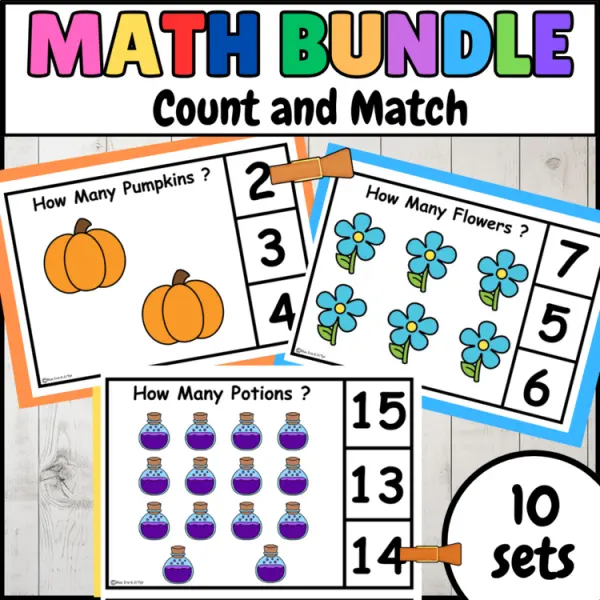
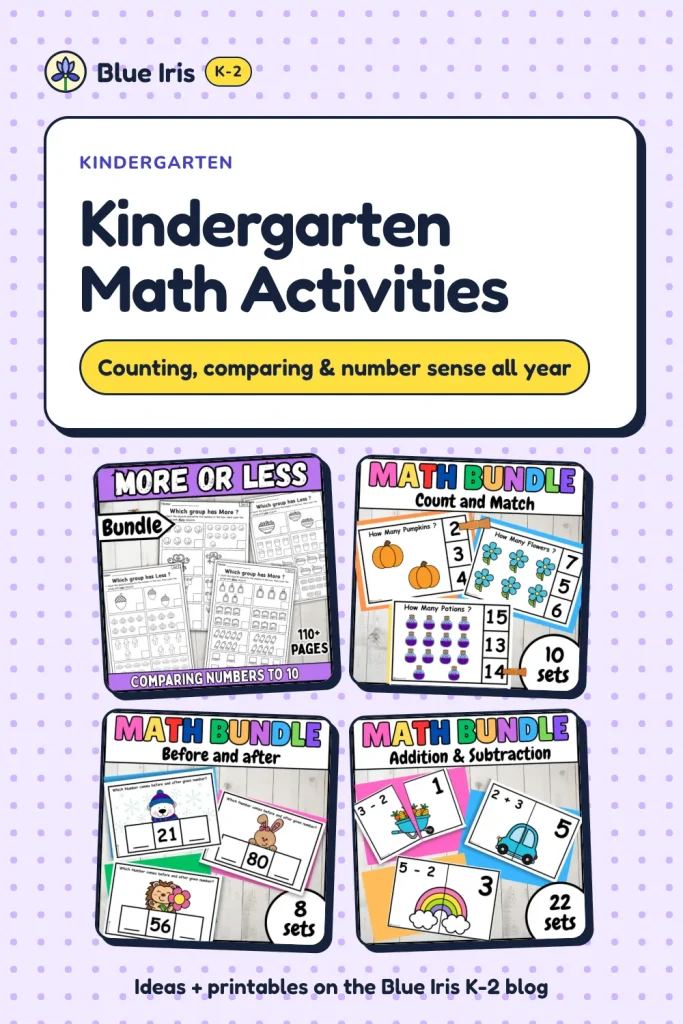
Matching a numeral to a set of objects is one of the first big steps in kindergarten math. Count-and-match games are perfect for centers: students count the group, find the matching numeral and clip or match it.
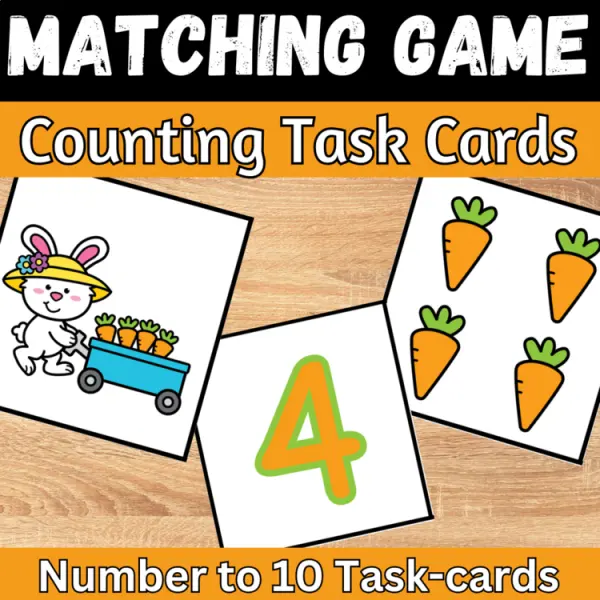
In spring, these count-and-match center cards are a class favorite.
Comparing numbers: more or less
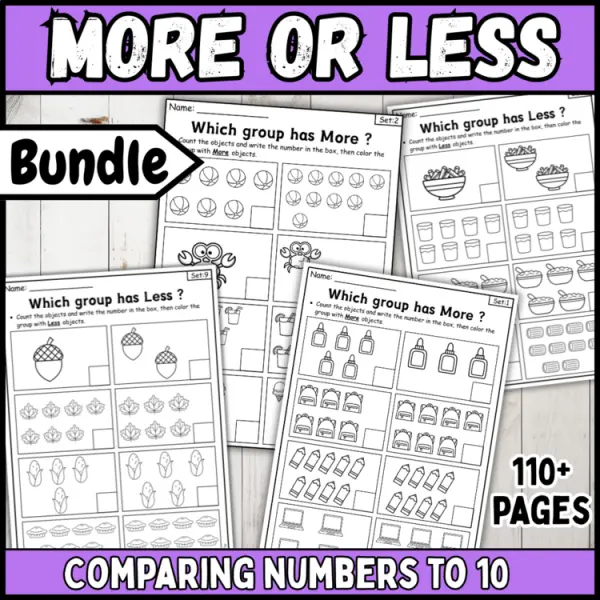
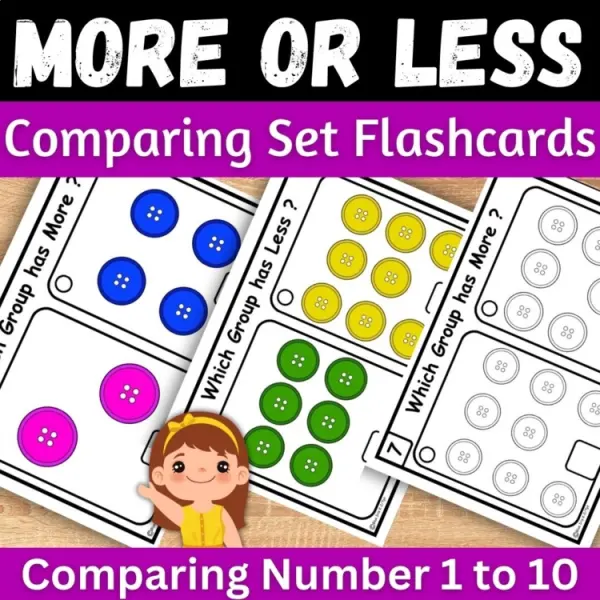
Once students can count a set, they can start comparing two sets. “Which group has more?” builds the language of comparison and prepares students for addition and subtraction. Seasonal themes keep the same skill feeling new each month.
Task cards are a great second format for the same skill. Use them in a math center, for a quick scoot game or as an exit ticket.
Number order: before, after and missing numbers
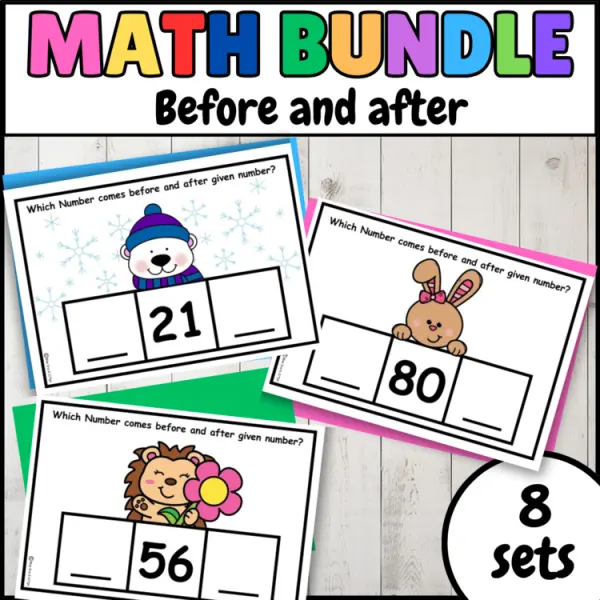
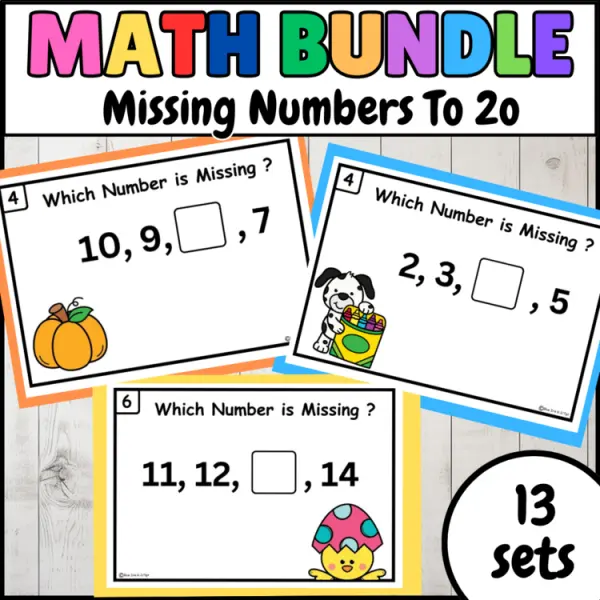
Knowing what comes before and after a number, and finding the missing number in a sequence, builds the mental number line students will use for counting on and counting back.
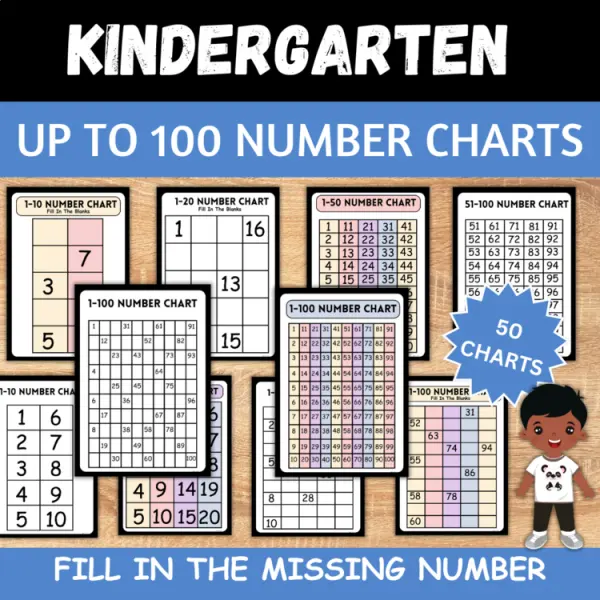
Number charts help students see patterns in the counting sequence. Blank and missing-number versions make it easy to differentiate.
Addition and subtraction within 5
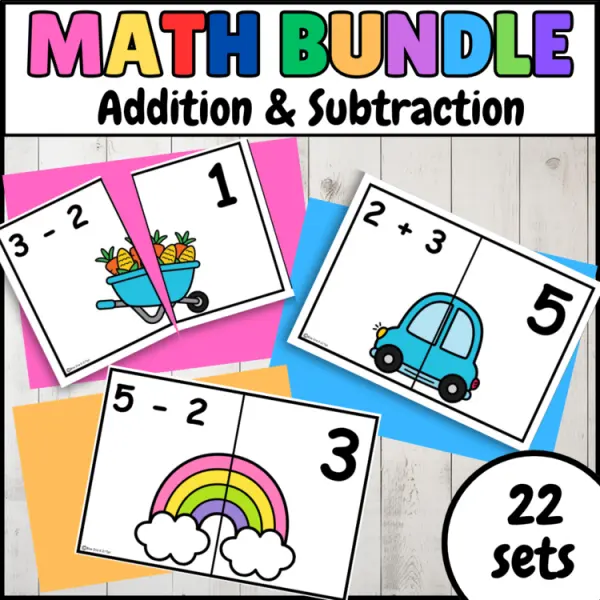
Fluency within 5 is a key kindergarten goal. Matching games where students pair an equation with its answer turn fact practice into a game they actually want to play.
A simple weekly math routine
- Monday: Introduce the skill with the whole group and a hands-on model.
- Tuesday to Thursday: Rotate through a center game, task cards and a worksheet.
- Friday: Quick check with a no-prep page or exit ticket.
- Next week: Same skill, new seasonal theme, so students focus on the math.
Tips for kindergarten math centers
- Keep one skill per center so expectations are clear.
- Use self-checking cards so students can work without waiting for you.
- Store each game in a labeled zip bag or photo box.
- Change the theme, not the format, when a new season arrives.
Browse every kindergarten math resource in the shop, or see what is new for fall.